
A glossy, humidity-resistant finish can be a major hair confidence boost, especially in South Florida. But Brazilian blowout safety deserves the same attention as the final shine. A smoothing service should feel like a personalized beauty decision, not a rushed add-on between color appointments.
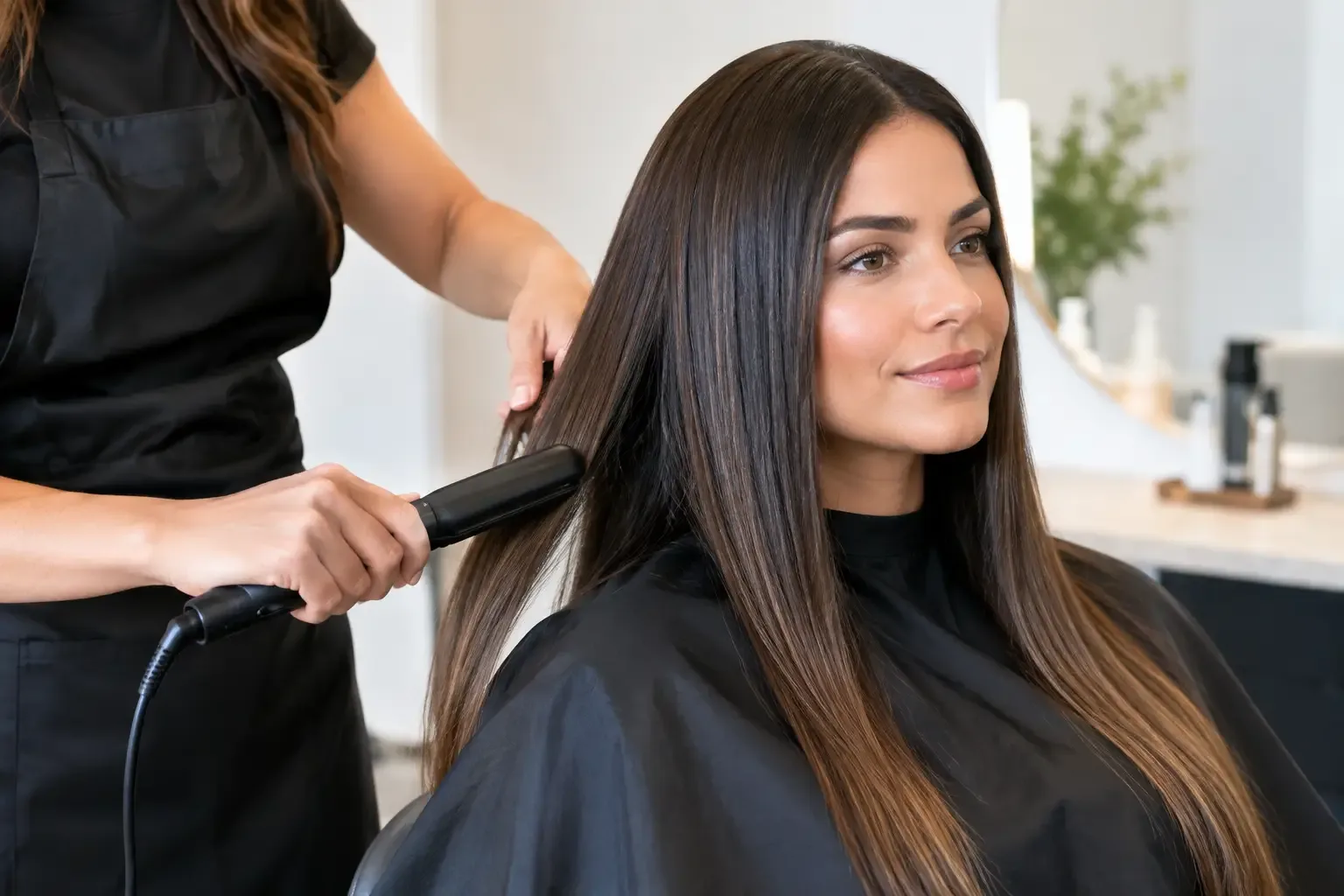
Brazilian blowout treatments are popular because they can reduce frizz, soften texture, cut down styling time, and create a polished finish that lasts for weeks. The right service can make morning styling feel dramatically easier. The right consultation is what helps you decide whether that result fits your hair, lifestyle, and comfort level.
What Brazilian Blowout Safety Really Means
The term “Brazilian blowout” is often used broadly for salon smoothing treatments, but formulas and application methods are not all the same. Some treatments are designed to temporarily coat and smooth the hair, while others use chemistry and high heat to create a more pronounced change in texture. Results, longevity, maintenance, and exposure considerations can vary from one formula to another.
One of the biggest questions is whether a product contains formaldehyde or formaldehyde-releasing ingredients. When certain ingredients are heated during the blow-drying and flat-ironing process, they may release formaldehyde gas. This can cause eye, nose, throat, or skin irritation for some people. Sensitivity varies, but that does not make the question optional.
A trustworthy salon conversation is specific. Rather than relying only on labels such as “natural,” “clean,” or “formaldehyde-free,” ask which exact treatment is being used and whether the stylist can explain its ingredient information and recommended application process. Marketing language can sound reassuring without telling you how a formula performs under heat.
Questions to Ask Before a Brazilian Blowout
A great smoothing appointment begins before the product touches your hair. Your stylist should look at your current condition, color history, density, curl pattern, and goals. They should also ask about scalp sensitivity, allergies, respiratory concerns, pregnancy, and previous reactions to chemical services.
Ask what the treatment is designed to do for your specific hair. Do you want to loosen your curl pattern, reduce humidity-driven frizz, make blowouts faster, or simply achieve a smoother surface? These are different goals, and they may call for different services. If you love your natural curls and only want more manageable wash days, a lighter smoothing option may make more sense than a stronger texture-altering treatment.
It is also smart to ask how the service works with your color. Fresh highlights, balayage, blonding, vivid color, extensions, and previously processed hair all need thoughtful planning. A smoothing service can be beautiful on color-treated hair, but timing matters. Your stylist may recommend spacing services apart, adjusting heat, or choosing a gentler formula to protect the look you worked hard to achieve.
Ask these details plainly: what product will be used, how long will it be left on, will heat be used, how long should results last, and what aftercare is required? Clear answers are a sign of an intentional service, not an inconvenience.
Ventilation and Technique Matter
Brazilian blowout safety is not only about the bottle. The salon environment and application technique matter just as much. Proper ventilation is especially important when a treatment is activated by heat. A professional should follow the manufacturer’s instructions, use appropriate protective practices, and avoid treating a smoothing service like a one-size-fits-all express appointment.
Heat is a key part of many smoothing treatments, which means it must be matched to the condition of the hair. Fine, fragile, heavily lightened, or compromised strands do not need the same approach as healthy, coarse, resistant hair. Excessive heat can leave hair looking overly flat, dry, or brittle, even if the initial finish appears sleek.
This is where an experienced stylist makes a visible difference. The goal is not to press every strand into submission. It is to create a refined, wearable finish while respecting your hair’s strength, movement, and future color plans.
Who Should Pause or Choose Another Option?
A Brazilian blowout is not automatically the best choice for every client. If your scalp is irritated, you have open skin, your hair is breaking, or you recently had a strong chemical reaction, it is wise to postpone the service and discuss alternatives. Hair that is severely overprocessed may need a period of strengthening, trimming, and moisture-focused care before adding another chemical treatment.
People with asthma, fragrance sensitivity, respiratory conditions, or known sensitivities to salon chemicals should speak with a medical professional when appropriate and be direct with their stylist before booking. The same goes for pregnancy or breastfeeding. There is no universal answer that fits every person, product, or comfort level, so an informed conversation is more useful than a casual yes or no.
A patch test may be recommended for clients with a history of skin reactions. It cannot predict every possible response, but it can be a helpful precaution. If you experience burning, intense itching, coughing, watery eyes, dizziness, or unusual discomfort during a service, say something immediately. Beauty services should never require you to ignore how your body feels.
Protecting Your Results Without Overdoing It
Aftercare plays a major role in how your smoothing treatment looks and how long it lasts. Your stylist should give you instructions based on the formula used. Some treatments have an immediate wash-and-go finish, while others may require a waiting period before shampooing, tying the hair back, or tucking it behind the ears.
Use the recommended cleansing and conditioning routine, but do not assume every sulfate-free product is automatically ideal. Product choice depends on the treatment and your hair needs. If you have extensions, a rich color service, or a naturally oily scalp, your home routine may need a little more customization.
Try to avoid stacking too many intensive services into the same window. Frequent high-heat styling, aggressive lightening, chemical texture services, and a smoothing treatment can ask a lot of the hair fiber. That does not mean you must choose only one beauty goal forever. It means your service plan should have breathing room. A polished blonde, seamless extensions, and smooth finish are all possible when the timing and hair health strategy are right.
A Better Consultation Creates Better Hair Days
The most beautiful result is one that suits the person wearing it. For some clients, that means ultra-sleek strands that make humid afternoons feel effortless. For others, it means softer curls, less frizz, and a faster blowout without losing natural volume. A good stylist listens for the difference.
At Pier Blondie, a smoothing consultation should feel as customized as a color transformation or extension blend. Be ready to share your full hair history, your regular styling habits, and what you want to see in the mirror after the service. Bringing photos can help, but honest details are even more valuable: Do you swim often? Do you wear your hair curly most days? Are you committed to bright blonde? Do you use a flat iron daily?
Those answers shape the recommendation. They can also reveal when a nourishing treatment, professional blowout, gloss, trim, or a different smoothing option will serve your hair better than a Brazilian blowout right now.
Your hair should look like a work of art, but it should also feel like yours. Ask the questions, choose a stylist who takes your concerns seriously, and book the service that brings out your most confident, polished version of yourself.