

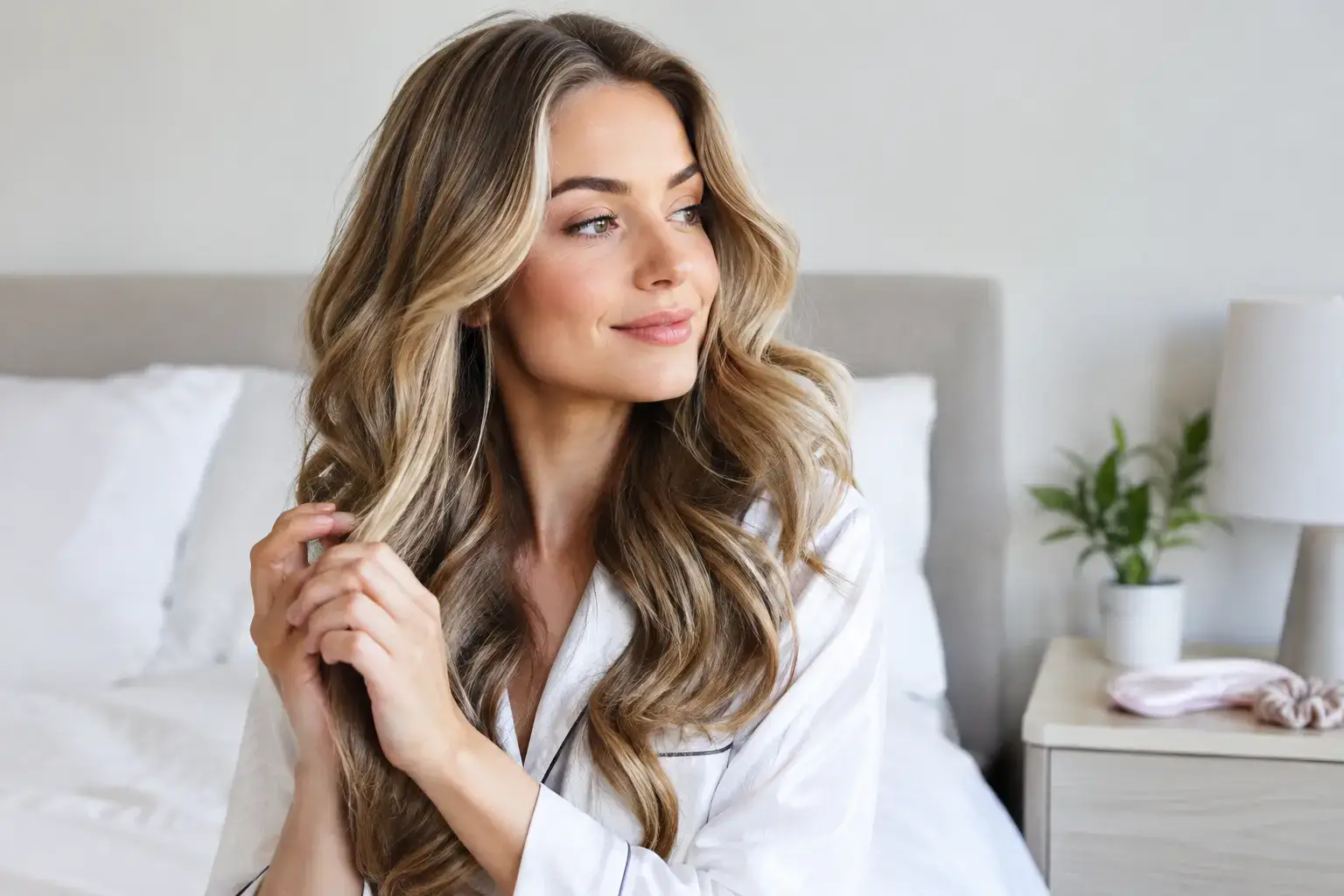
A fresh blowout should not be a one-night-only moment. Whether you are heading to brunch, the office, a wedding weekend, or another South Florida dinner reservation, knowing how to preserve blowout overnight helps you wake up with polished volume instead of dents, frizz, and flat roots.
The secret is not piling on products or trying to make your hair look untouched. It is protecting the shape your stylist created while keeping moisture, friction, and heat from working against it. A few thoughtful nighttime habits can turn one beautiful salon blowout into several confidence-boosting days.
How to Preserve a Blowout Overnight Without Flattening It
Start before your head hits the pillow. If your hair is even slightly damp from humidity, a workout, or a steamy shower, address that first. Sleeping on damp hair is the fastest route to flattened roots, puffiness, and a blowout that loses its smooth finish overnight.
Give your hair a moment to cool completely if you just used a curling iron or touch-up tool. Hair is more likely to hold an unwanted bend while it is still warm. Once it has cooled, gently brush through the lengths with a soft boar-bristle or mixed-bristle brush, beginning at the ends and working upward. This distributes your natural oils and keeps the finish looking glossy rather than separated.
Then choose a sleep style based on the look you want to keep. For a classic bouncy blowout, loosely gather the hair at the very top of your head into a high, soft ponytail. This is often called a pineapple. Use a silk or satin scrunchie, not a tight elastic, and keep the ponytail loose enough that it does not leave a crease at the crown.
If your blowout has more of a smooth, sleek finish, divide the hair into two or three large sections and lightly wrap each around a jumbo Velcro roller. Secure the rollers gently at the base, without pulling. The goal is soft lift at the root and bend through the ends, not a tight curl. This method takes a little more effort, but it is especially helpful for fine hair that tends to collapse overnight.
For hair with extensions, be extra mindful of tension. A loose high ponytail or large rollers work well, but never twist or secure the hair tightly around extension bonds, tapes, or wefts. Your style should feel comfortable enough to sleep in, not like it is pulling.
Your Pillowcase Matters More Than You Think
Cotton is comfortable, but it can create friction as you move in your sleep. That friction roughs up the cuticle, absorbs moisture, and encourages frizz, particularly in humid Delray Beach weather. A silk or satin pillowcase gives your hair a smoother surface to glide across, helping preserve shine and reducing the chance of tangles.
A satin bonnet can also work beautifully, especially for textured hair or a blowout with curls. Choose one with enough room for your hair to sit loosely inside. A bonnet that is too snug may protect the lengths while pressing the crown flat, which defeats the purpose of preserving your volume.
If you tend to toss and turn, use both a silk or satin pillowcase and a loose protective style. It is a small switch that can make your second-day hair look far more intentional.
Keep Humidity and Sweat From Ruining the Finish
Florida humidity does not wait for morning. A hot shower, heavy skincare routine, or warm bedroom can introduce moisture that causes freshly blown-out hair to expand and lose definition. Keep showers lukewarm when possible, use a shower cap that fully covers your hairline, and avoid standing in a cloud of steam after you are done.
If you are prone to sweating at night, focus on your environment. Lowering the room temperature, using breathable bedding, and keeping heavy blankets off your neck can help protect the roots. You do not need to sacrifice sleep for your hair, but a cooler night often means a better blowout in the morning.
Be careful with overnight hair oils and rich leave-in treatments. They can be wonderful for dry ends, but they are not always the right move when you are trying to extend a voluminous style. Too much product can weigh down the hair, make it look piecey, and require more heat styling the next day. If your ends need a little softness, use the tiniest amount only from mid-length to ends.
The Right Morning Refresh Makes All the Difference
Take down your ponytail, rollers, or bonnet slowly. Do not immediately rake through your hair with your fingers. First, flip your head forward and gently shake the roots to bring back lift. Then place your part where you want it and use a soft brush to smooth the surface.
For minor creases or flattened areas, a quick blast of cool air from your blow dryer can help reset the shape. Aim the airflow at the roots while lifting sections with your fingers or a round brush. If you need more polish, use a round brush on only the few sections that lost their bounce instead of redoing your entire head.
Dry shampoo is best used strategically. Apply it at the roots before they look oily, rather than waiting until the hair feels heavy. Spray lightly from several inches away, let it sit for a minute, then massage it in or brush it through. Overapplying can create a dull, powdery finish and make freshly colored hair look less luminous.
A lightweight shine spray can revive the look of your ends, while a pea-sized amount of smoothing cream can tame flyaways around the hairline. Use one finishing product at a time when possible. The most expensive-looking blowouts have movement, softness, and a clean finish, not a layer of product.
Common Blowout Mistakes to Skip
The biggest mistake is tying your hair into a tight bun or low ponytail before bed. Both can leave a visible bend that is difficult to remove without applying more heat. Another common issue is sleeping with your hair completely down on a cotton pillowcase, especially if you have layers or curls that rub together as you sleep.
Avoid brushing aggressively in the morning. A blowout needs a gentle reset, not a full detangling session. If you have a stubborn tangle, hold the section above it and work from the ends upward to prevent pulling and breakage.
Also, resist the urge to keep adding hairspray each day. Flexible hold products are useful for an event-ready style, but repeated layers can make hair stiff and harder to revive. If your hair begins to feel coated, it may be time for a fresh wash and another salon-worthy reset.
Adjust Your Routine for Your Hair Type
Fine hair usually benefits from large rollers and a small amount of root-focused dry shampoo. The trade-off is that too much brushing or product can quickly remove the airy volume you are trying to protect.
Thick or coarse hair may hold a blowout longer but can react strongly to humidity. A satin pillowcase, a loose pineapple, and a light anti-frizz finishing product are often the best combination. For naturally curly or textured hair that has been blown smooth, wrapping the hair around the head or using a roomy satin bonnet can help maintain the sleek result without crushing it.
Keratin-treated or Brazilian blowout-treated hair often stays smooth with minimal effort, but it still benefits from reduced friction and a dry sleeping environment. If you wear extensions, prioritize gentle handling and avoid pulling at the roots. Your maintenance routine should support both your style and the health of your natural hair.
A great blowout is part technique, part maintenance, and part knowing what your own hair responds to. If you want a polished style built to last beyond one evening, the styling team at Pier Blondie can tailor the finish, volume, and product approach to your hair goals. Treat your nighttime routine like the final step of your appointment, and let tomorrow’s hair make the same beautiful impression.